You’re outside on a Saturday afternoon, wearing your everyday glasses while sanding a table to repaint. You catch a rough edge with the sander, and suddenly, ping! A wood chip breaks loose, dinging you right in the lens. Fortunately, your eye is uninjured. Unfortunately, your $600 designer progressive lenses aren’t.
Maybe you’re not into woodworking, but you enjoy gardening. You’re busy pruning your prize rose bushes when you wipe the sweat from your brow with the back of your work glove. A stray thorn has lodged there, and in the blink of an eye, you’ve irreparably scratched your lens.
These are the perils of wearing your everyday glasses to perform tasks that require eye protection. But glasses are glasses, right? Wrong. Under that rationale, shoes are shoes, but which would you wear to mow the lawn: Italian leather dress shoes or work boots?
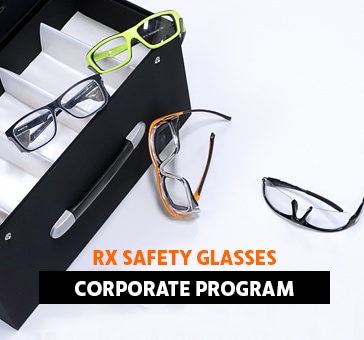
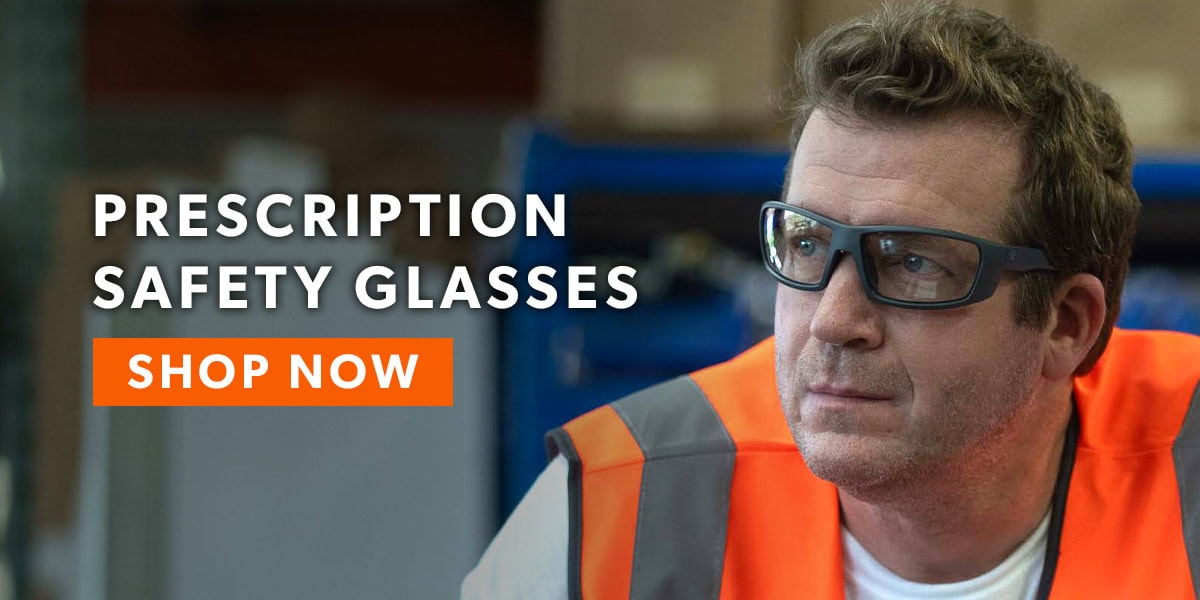
The same logic applies to your glasses. Your everyday glasses are wonderful — but they’re not DIY eye protection. If you wonder about protecting glasses from scratching while working on DIY projects, consider prescription safety glasses.
All glasses are not built the same. Here’s why standard glasses don’t qualify as safety gear.
You wear your everyday glasses for driving, working, reading, and more. During those tasks, you’re generally safe from items hitting your face. The same can’t be said about many DIY projects.
“Dress glasses,” whether made from CR-39 or standard plastic, aren’t designed to withstand impact. If you’re weed-whacking and the equipment throws a pebble, your lens could shatter, causing serious eye damage. That’s why prescription safety glasses are the best choice for gardening and other DIY tasks.
You shelled out a few extra dollars for the nice anti-reflective coating on your designer glasses, and it’s served you well so far. What it won’t do, though, is protect your lenses from scratches, gouges, and other damage. Dust, sawdust, fragments, and harsh chemicals like paint thinner or brake cleaner can scratch or strip that coating.
The fragility of these coatings is another reason that everyday glasses aren’t the best glasses for woodworking, landscaping, and other projects.
While wearing your regular glasses, take a look in the mirror. The lens likely covers your eye, but only when you look directly at yourself. From the top, bottom, or side, you’ll notice a gap between your glasses and your face.
Picture yourself outside, pouring gasoline into the leaf blower, changing your car’s oil, or building a chicken coop. Now, considering that gap around your glasses, think about how much protection they’d give you against liquid spatter, a flying nail, or an errant wood chip. Realistically, if any splashback or debris came at your face, your everyday glasses would do little to stop it from getting into your eyes.
You might think the cost of an extra pair of prescription safety glasses to wear for DIY projects isn’t worth it, but the truth is it’s an investment that actually saves you money over time.
If your designer glasses break while you’re tinkering in the garage, you’re on the hook to replace them.
Let’s break down the math for ANSI Z87 vs. standard glasses:
Cost of replacing designer frames + lenses = $300–$800+
Cost of a durable pair of ANSI Z87 prescription safety glasses = Starts around $50–$100
Those few figures alone — not even factoring in potential medical costs — prove that buying a dedicated pair of safety glasses to wear around the garage, workshop, or garden isn’t an extra expense; it’s part of protecting your primary investment: your everyday glasses. When you have both, your everyday glasses will last longer.
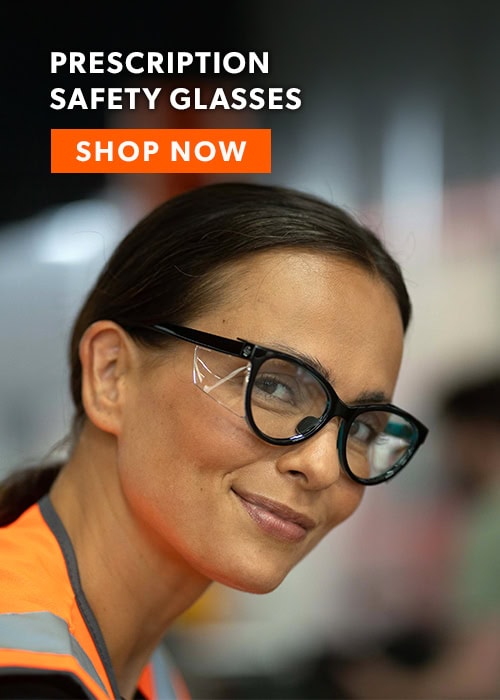
Here are the features that are best at protecting glasses from scratches, preventing breakage, and avoiding eye hazards:

Wraparound protection: This eliminates the gap between your glasses and your face, keeping particles, debris, and liquid splashes out of your eyes.

Durability: Safety frames are generally made of TR-90 nylon or polycarbonate that can withstand significant impacts. Even if you drop them on the concrete garage floor, they won’t snap.
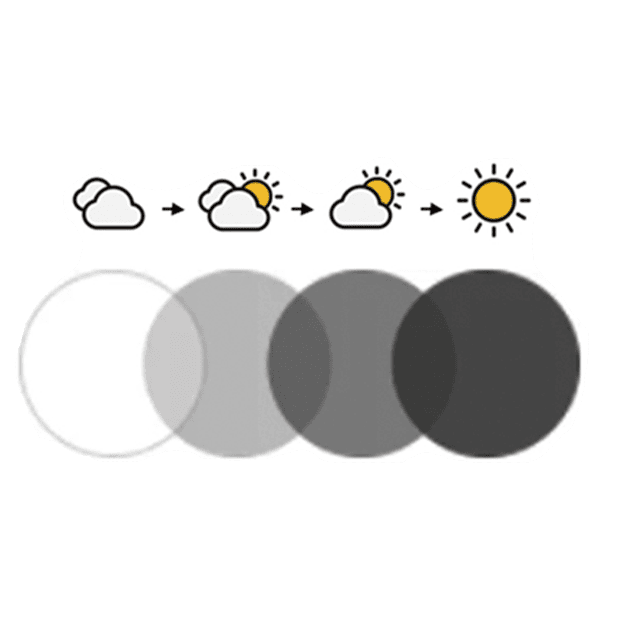
Transition lenses: For gardeners or anyone who moves back and forth between the dark garage and the sunny driveway, transition lenses adapt to changing light conditions, protecting your eyes from harmful UV rays while still allowing you to see easily indoors.
Some people may prefer wearing safety goggles over their daily glasses. While this is an option, the downside is that they tend to be uncomfortable, fog up quickly, and distort your vision.
On the other hand, safety goggles with prescription lenses solve all three of those issues, making your DIY projects more enjoyable.
Like a hammer, drill, or weed-whacker, prescription safety glasses are a valuable addition to your toolbox that make your life — and your DIY projects — easier.
Browse our selection of prescription safety glasses today.


Stay on top of the latest news about prescription safety glasses, eyewear, sunglasses, and all the trends in the industry.
DISCOVER NOWBe the first one to know about promotion, new products, and more.
Follow Us On Instagram @rx_safety