Please ensure Javascript is enabled for purposes of website accessibility Safety Lens Replacement - RX Safety

When you’ve found your “unicorn” safety glasses—the pair that fits perfectly, stays comfortable all day, and stands up to tough working conditions—it’s understandable that you don’t want to part with them just because your prescription has changed or the lenses are scratched.

Fortunately, you don’t have to. Rx Safety lens replacement lets you keep the frames you love while restoring clear vision and reliable protection. Rather than replacing high-quality safety glasses, relensing helps preserve the fit, comfort, and durability you rely on while maintaining workplace safety and legal compliance—and saving you the cost of a brand-new pair.

When to Replace Your Safety Lenses

You’ll know it’s time for a safety lens replacement when:

Your prescription changes

Your lenses become pitted, cracked, or chipped, which dramatically weakens their impact strength

Your lenses become deeply scratched from debris, compromising lens clarity, scattering light, and potentially damaging your vision

You need work-related upgrades like polarization or side shields added

You’re transitioning from standard to prescription safety lenses

Your glasses take a direct hit, like from a falling or flying object

Even without visible damage or vision changes, safety lenses should be replaced periodically based on use: every 12 months for light or occasional use and every 6 months for heavy use or high-risk tasks such as construction, grinding, or chemical work. Regardless of use or visible wear, replace lenses at least every 1–3 years, as aging plastic becomes less resistant to impacts, scratches, and gouges, reducing its protective capacity.

How the Safety Lens Replacement Process Works

Replacing your safety lenses through RX-Safety is simple.

Start by visiting our Safety Glasses Lens page, where you’ll select your frame type and provide details about your frames, including the brand, model, shape, and color.

Next, choose your vision type—such as single vision, bifocal, progressive, or non-prescription—and enter or upload your prescription information if needed.

You can then select your preferred lens material, including polycarbonate, Trivex, or high-index lenses, along with optional coatings such as scratch protection, UV protection, anti-fog, anti-reflective, blue blocker, or mirror coatings.

Once your order is complete, securely ship your frames to RX-Safety with your prescription and order confirmation.

We’ll handle the lens replacement and return your glasses within 7–10 business days for prescription lenses or 3–5 business days for non-prescription lenses. Some specialty orders may require additional processing time.

Standards, Frame Compatibility, and Quality Assurance

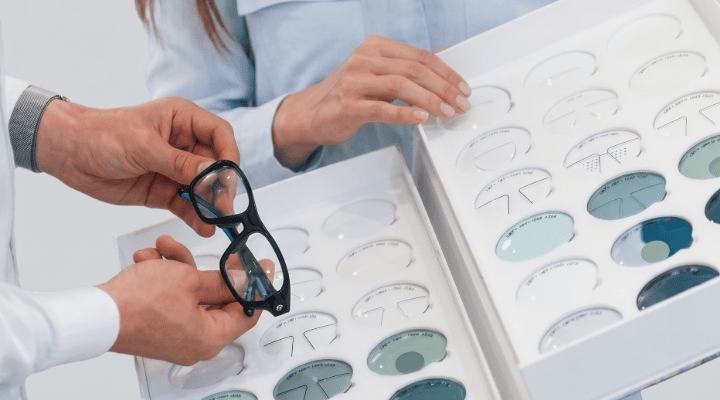
At RX-Safety, we custom-fabricate your replacement lenses to fit your safety frames, whether they’re metal, wrap-around, plastic, rimless, or semi-rimless. With our expert in-house lab technicians working on your order, you can rest assured that you’ll receive an ANSI Z87.1 lens replacement that adheres to all of the necessary workplace standards, keeping your eyes protected, your workplace compliant, and your vision crisp and clear.

Your safety glasses are in good hands with RX-Safety.

Frequently Asked Questions

Safety lens replacement is the process of removing old, scratched, or outdated protective lenses from your current pair of safety glasses and replacing them. Replacement lenses for safety glasses generally rely on certified high-impact materials like polycarbonate or Trivex.

To determine if your safety frame qualifies for a safety lens replacement, inspect the frame structure. Brittle, warped, cracked, loose, or severely worn frames cannot provide safety-compliant eye protection or securely lock a new safety lens in place. The internal lens bevel groove must be clean, deep, and undamaged.

Another element of whether your glasses qualify for safety frame relensing is the frame stamping. Qualifying safety glasses have a permanent stamp somewhere on the frame demonstrating ANSI/ISEA Z87.1 certification. Specifically, these stamps indicate:

  • Z87: Basic impact protection
  • Z87+: High impact protection
  • Z87-2: Basic impact protection and prescription certification
  • Z87-2+: High impact protection and prescription certification

The frame must also bear the manufacturer’s mark or logo, which allows our lab to confirm its ANSI Z87.1 certification.

Replacement safety lenses must meet strict impact, structural compatibility, and optical clarity standards. In the United States, the primary safety standard for glasses is ANSI/ISEA Z87.1-2025: American National Standard for Occupational and Educational Personal Eye and Face Protection Devices. Under this standard, replacement lenses must pass various safety tests, including:

  • High-velocity impact: The lenses must withstand the force of a 0.25-inch steel ball fired at 150 feet per second without shattering.
  • High-mass impact: The lenses must survive having a 1.1-pound pointed projectile dropped on them from 50 inches.
  • Optical quality: Lenses must pass rigorous tests for transparency, refractive power, and distortion-free vision.

The Canadian standard governing industrial eye and face protection is CSA Z94.3. In Europe, EN ISO 16321 is the current international standard.

Through RX-Safety, you can obtain safety lenses in two primary materials. Polycarbonate is lightweight, impact-resistant, UV-protective, and meets ANSI Z87+ high-velocity impact standards. Trivex offers the same, but with superior optical clarity and even better scratch resistance.

We also offer high-index plastics (1.67 and 1.74), thinner and lighter options ideal for stronger prescriptions, but these are typically rated for basic ANSI Z87.1 compliance rather than high-impact.

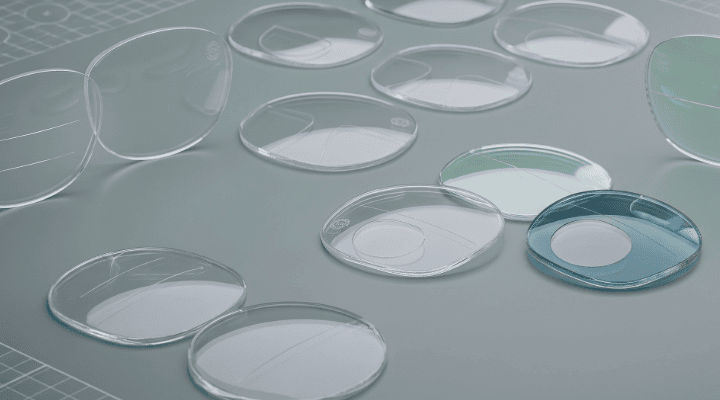
For safety lens replacement, we offer single vision, digital single vision, FT-28 (lined) bifocal, and progressive (no-line) bifocal options.

Damage to your safety lenses reduces their integrity by concentrating impact stress in the flawed areas rather than dispersing kinetic energy evenly. This can cause premature cracking or shattering. Scratches and pits also scatter light, which can cause blinding glare, visual distortion, and eye fatigue.
After we receive your existing frames, we craft, edge, and install your custom safety lenses. Typically, you should receive your order in the mail within 7 to 10 business days for prescription lenses and 3 to 5 business days for non-prescription lenses. More complex prescriptions, such as high-index or progressive bifocal lenses, can extend the total time it takes for us to produce your replacement lenses.

We offer various types of custom lens coatings for additional vision protection. These include:

  • A scratch-resistant coating to protect your lenses from gouging and abrasions
  • An anti-fog permanent coating to prevent fog from forming on your lenses, even in humid and changing conditions
  • A UV protection coating to safeguard your eyes from 100% of harmful UV rays
  • An anti-reflective coating to reduce glare
  • Mirror coatings to reduce glare and eye strain

Category Highlights

About Our Safety Lenses

Every replacement safety lens we craft begins with optical-grade materials designed to protect your eyes on the job: shatterproof polycarbonate or ultra-clear Trivex, both engineered to meet ANSI Z87.1 impact standards. These materials provide maximum shatter resistance to safeguard your vision without weighing you down, so you get lightweight comfort all day alongside powerful protection.

When you choose RX-Safety for safety lens replacement, our optical technicians custom-cut your lenses to fit your exact frame specifications. This gives you a precise, secure fit that locks safely into your bevel groove and protects your eyes through the toughest conditions.

Learn More

Blog

Safety Lens Replacement

How To Select The Best Lenses For Your Prescription Safety Glasses

At Rx Safety, there are many different lenses available for your prescription safety glasses. We know that choosing safety lens material, lens colors and coatings can sometimes be overwhelming, especially if it’s your first time buying prescription safety glasses. Our safety experts will quickly walk you through the process and get the best lens options […]

READ MORE about How To Select The Best Lenses For Your Prescription Safety Glasses

Polycarbonate Prescription Safety Lenses: Advantages and Disadvantages

When it comes to your safety glasses, you cannot mess around. You have to make sure that you protect your eyes at all times, regardless of the situations you are in or the environment in which you work. Whether you plan to use these glasses in professional or personal situations, the same basic truth remains […]

READ MORE about Polycarbonate Prescription Safety Lenses: Advantages and Disadvantages

Can High Index Lenses be Safety Glasses?

Prescription safety glasses offer more options than ever, including lens tints, protective coatings, bifocals, progressives, and lenses for strong prescriptions. One increasingly popular option is high-index lenses, which can provide a thinner profile for people who need stronger vision correction. But can high-index lenses be used in safety glasses? Yes—but there are some important limitations. […]

READ MORE about Can High Index Lenses be Safety Glasses?

Our Blog

Stay on top of the latest news about prescription safety glasses, eyewear, sunglasses, and all the trends in the industry.

DISCOVER NOW

Sign up for our Newsletter

Be the first one to know about promotion, new products, and more.