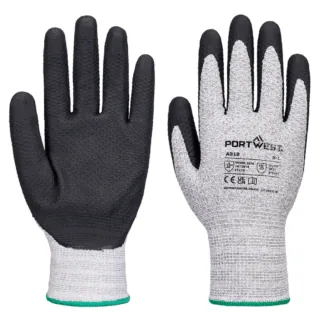
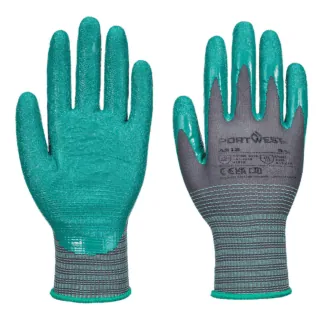
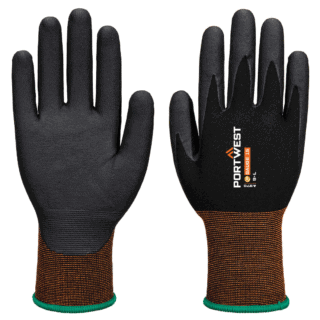
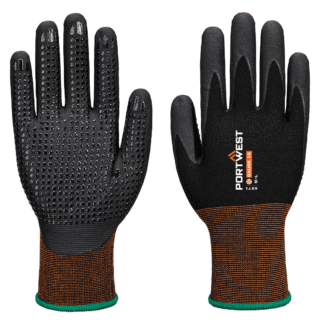
Liquids can make ordinary surfaces treacherous. Consider the loss of grip when a liquid film — like water, animal fats, oil and gas, or liquid chemicals — acts as a lubricant between a glove’s surface and the object being held. The film reduces the friction, turning what should be a secure grip into a slipping hazard.
This is the “friction gap,” in which the force required to hold an object exceeds the available friction. The friction gap makes the gloves useless for the task and dangerous for the wearer.
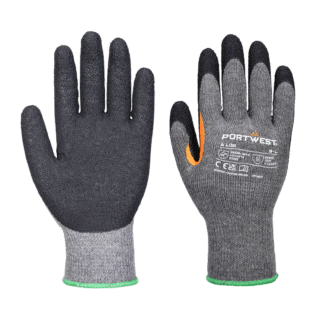
Fortunately, there’s a solution: grip technology such as high-traction grip gloves. Specialized glove coatings (or “dips”) use surface textures to displace, absorb, or suction away lubricating liquid films.
Safety gloves with these coatings are helpful for various applications.
Food Service
To maintain FDA compliance, grip gloves for food service must be made of impermeable, food-safe materials.
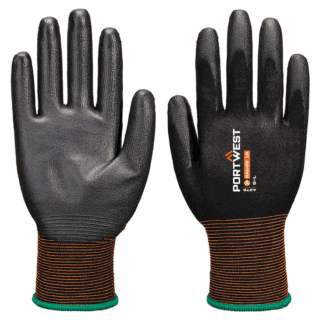
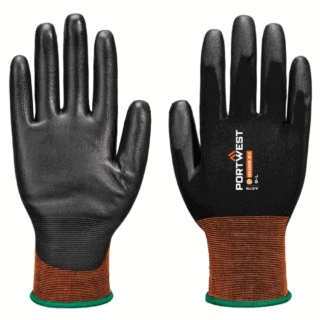
- Nitri-Grip is a smooth nitrile material providing a non-porous, sanitary barrier. Highly resistant to animal fats and oils, Nitri-Grip provides a tacky finish, allowing food service workers to maintain grip on dry or damp surfaces. Without added texture, it’s less effective in heavy grease.
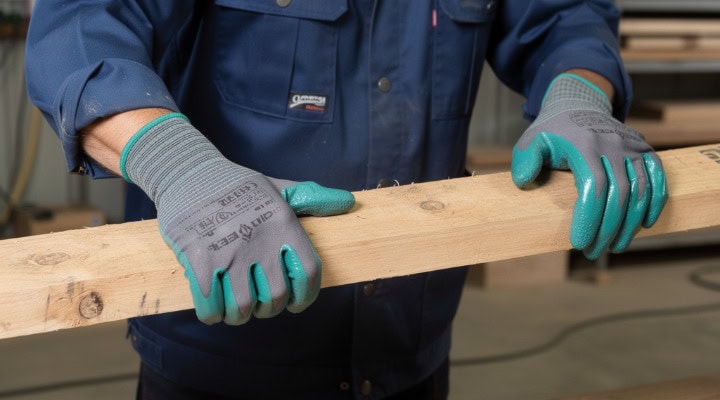
- Latex Crinkle is a textured coating that provides superior wet and dry grip, ideal for handling fats and liquids.
Oil and Gas Handling
Work gloves with standard foam coatings quickly become saturated and lose effectiveness when working with oil and gas.
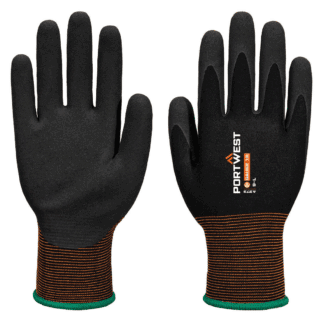
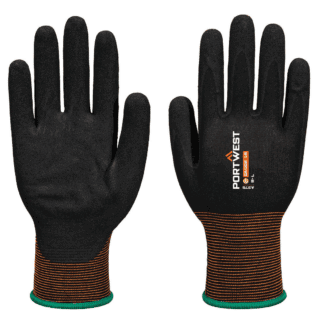
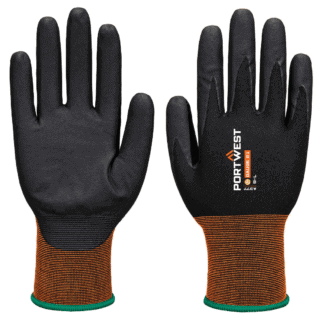
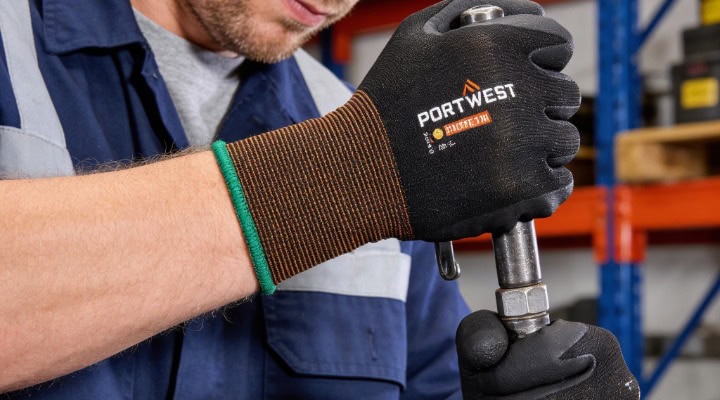
- Sandy Nitrile adds a rough, sandpaper-like texture that provides a non-slip grip for working with heavy oils. The textured coating creates a micro-suction effect, like tiny suction cups or tire treads, channeling liquids away from the fingertips, so the nitrile can directly contact the object or surface you’re gripping. Sandy nitrile doesn’t saturate as easily as open-cell foams and provides high abrasion resistance.
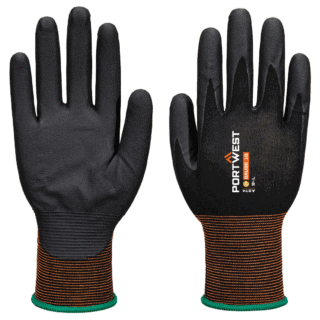
- Microporous Foam Nitrile uses tiny air pockets to absorb and draw oil away from the contact surface like a sponge. It offers superb grip in light-to-medium oil, although it becomes saturated more easily in heavy oil applications, so it’s less ideal for sustained immersion or drenching.
Chemical Handling
To handle chemicals safely, your gloves require a continuous liquid-proof layer and a textured exterior to prevent slippage.
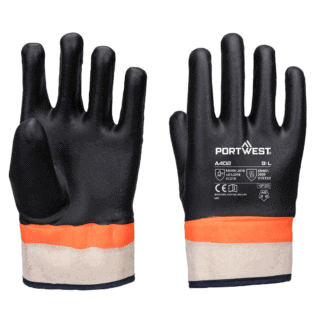
- Double-Dipped Sandy Nitrile provides an impermeable base coating to protect your hands from chemicals, along with a sandy coating for mechanical grip. Even when your glove’s surface is wet, you maintain a secure grip.
- Flock-Lined Nitrile offers comfort and excellent gripping power for extended periods of heavy-duty cleaning or assembly tasks.
From the processing line to the offshore rig, don’t let a slip compromise your safety. Explore our range of high-traction grip gloves designed for the world’s slickest environments.