










































Please ensure Javascript is enabled for purposes of website accessibility Cut Resistant Gloves - ANSI Cut Level A1 to A9- Page 2 of 3 - RX-Safety

Cut Resistant Gloves

If you’re working on a job site, you don’t need us to tell you how vulnerable your hands are. Whether you’re welding a pipe or hammering a nail, your hands are often directly in the path of danger. The right gear, however, can help prevent many common lacerations.

Bulky leather gloves are yesterday’s news. Today’s work gloves feature engineered yarns such as Kevlar, steel fibers, and high-performance polyethylene, offering high strength-to-weight ratios. No matter what your cut protection needs are, lightweight, wearable, high-performance gloves are available. Many gloves also include wearability features like breathable liners and ergonomic designs.

What Do Cut Resistance Ratings Mean?

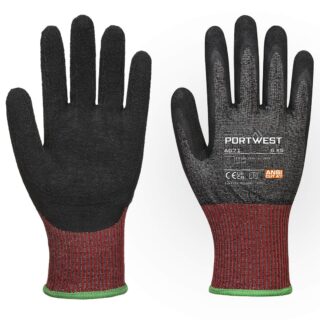
In the US, work gloves are rated according to the ANSI/ISEA 105 standard. Cut resistance is rated on a scale of A1-A9, which corresponds to the number of grams of force the gloves can withstand. The higher the number, the higher the level of cut protection. Your employer or job site may also specify minimum cut ratings based on the task.

  • Light duty (A1-A3): Appropriate for general use, warehouse work, and small parts assembly
  • Medium duty (A4-A6): Commonly used for construction, glass handling, and HVAC work
  • Heavy duty (A7-A9): Designed for high-risk tasks such as metal stamping, recycling, and meat processing

EN 388 is the European standard for cut resistance. Many gloves at RX Safety carry both ANSI and EN 388 ratings, providing dual certification for added verification.

Additional Safety Glove Features

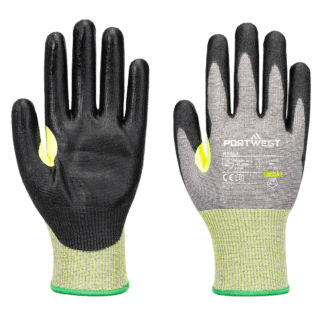
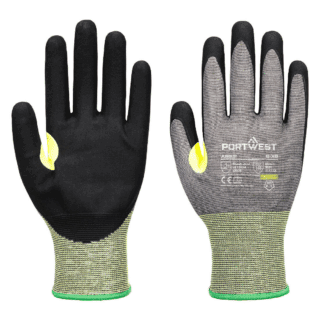
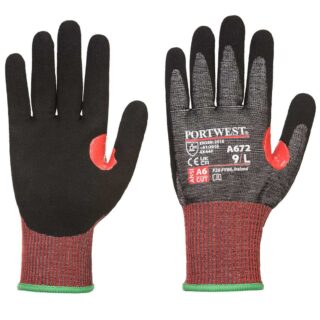
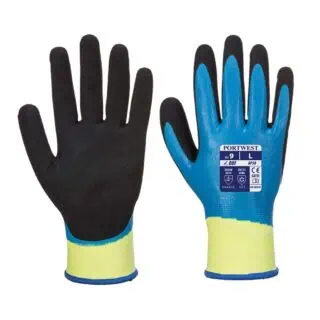
Cut-resistant gloves feature different coatings suited to different environments. A nitrile coating provides a reliable grip in wet or oily environments, and it offers good resistance to other chemicals, as well. Made of synthetic rubber, nitrile gloves tend to be more abrasion-resistant, but they can also be a bit less breathable than other options.

Nitrile-coated gloves tend to be less breathable and heat-resistant than other coatings, and the coating can degrade if exposed to solvents such as toluene or acetone.

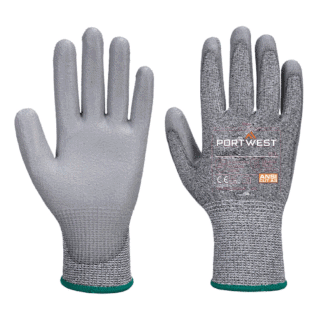
Gloves with a polyurethane, or PU, coating work well in dry environments, and they tend to offer the wearer better breathability, movement, and flexibility than nitrile-coated gloves. They don’t work as well in wet or oily environments, however, and offer limited resistance to chemicals.

Search our wide selection of cut-resistant gloves for the ones you need by using the “Filter by Cut Level” suggestion. At RX Safety, we make it easy to find your perfect pair of gloves at an affordable price.

Frequently Asked Questions

Multiple materials are used in cut-resistant gloves, including Kevlar, steel mesh, basalt, and high-performance polyethylene. Each material offers its own pros and cons when it comes to cut-resistance and wearability. Kevlar offers flexibility and heat-resistance, steel mesh has improved tactile feedback, HPPE is lightweight, and basalt features good abrasion protection.

No, because no glove is 100% cut-proof. No matter which pair of gloves you wear, you still need to exercise caution around blades and other dangers. Serrated and rotating blades are especially hazardous, even with highly-rated gloves. Never put your hands in harm’s way or assume your gloves will protect you.

Look for gloves that are specifically indicated for your job, or ones appropriate for the tasks you do every day. Check with your employer or job site to see if they have minimum PPE standards or recommendations. When in doubt, selecting a higher-rated glove can provide an added margin of protection.

Yes, most cut-resistant gloves can be laundered in a home washing machine, but pay special attention to the care tag. Some gloves may require a lower temperature wash or a gentler cycle. No matter which pair of gloves you have, you should never use bleach, as it may damage the palm lining or even degrade the gloves’ fabric.

ANSI is an American scale rated A1-A9 that measures the grams of load a glove can withstand before it’s penetrated. EN 388 is a European scale rated A-F that measures the newtons of force a glove can withstand before it’s penetrated. At RX Safety, our work gloves are dual ANSI/EN rated for additional safety verification.

No, cut-resistant gloves do not stop needle punctures unless they’re separately rated as puncture-resistant.

Different palm coatings are better suited to different work environments. Nitrile gloves are better in wet or oily work situations, while PU-coated gloves are better for dry tasks that require a high degree of dexterity. Workers who spend the majority of their time outside tend to prefer nitrile-coated gloves.

Many, but not all, cut-resistant gloves are touchscreen compatible. Look for gloves that have a higher gauge fabric, which indicates a tighter, finer weave, better for dexterity. A nitrile coating also works better with most touchscreens.

Gloves should fit as snugly as possible while still being comfortable for the wearer. Gloves that feel almost like a second skin are less likely to snag or catch. However, gloves that are too tight fatigue hands more quickly.

No, cut-resistant gloves are only food-safe if they are separately rated for food safety.

Category Highlights

Deep Dive: Understanding Cut Resistance Levels

The US uses ANSI standards to rate cut-resistant gloves on a scale from A1 to A9. Higher numbers indicate a higher cut resistance. European countries use a different, but similar, standard called EN 388.

The test used to determine ANSI cut resistance uses a tomodynometer, referred to as TD-100. In a TD-100 test, a piece of cut-resistant fabric is held in place on an electrically conductive surface while a blade under a specified amount of pressure is moved across the surface.

If the blade makes contact with the conductive plate, it’s rated as a cut. This provides for a much more exact test than relying on sight alone. The tester also records the cut distance, or the length a blade has to travel before cutting through the fabric.

These results are used to rate a pair of gloves on the A1-A9 scale.

ANSI Cut Rating Grams of cut-resistance Typical industries
A1 200-499 Warehouses, general construction
A2 500-999 Automotive assembly
A3 1000-1499 Metal handling
A4 1500-2199 Commercial HVAC work
A5 2200-2999 Paper production
A6 3000-3999 Metal stamping
A7 4000-4999 Meat processing
A8 5000-5999 Oil and gas, glass cutting
A9 6000+ Recycling, waste management

Choosing the right level of cut-resistance helps you pick gloves that are both safe and comfortable. At RX Safety, we offer a wide variety of gloves at all ANSI levels of cut resistance, and our filtered search makes it easy to find the gloves you need.
Blog

Cut Resistant Gloves

Understanding the Levels of Cut Resistant Gloves: A Comprehensive Guide

In the realm of personal protective equipment, understanding the levels of cut resistant gloves is crucial for ensuring optimal hand protection in various work environments. These gloves are categorized based on their ability to withstand cuts, abrasions, and punctures, offering different levels of protection. shop Cut Resistant Gloves shop safety gloves The Importance of Cut […]

READ MORE about Understanding the Levels of Cut Resistant Gloves: A Comprehensive Guide

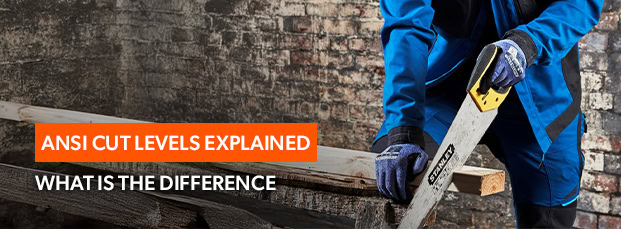
ANSI Cut Levels Explained: What is the Difference

If you’ve ever shopped for safety gloves, you’ve probably noticed labels like A2, A4, and A9. These ratings indicate the level of cut resistance each glove provides, helping you choose the right protection for your tasks.  Gloves with too little cut resistance can leave your hands vulnerable to injury, while gloves with too much can […]

READ MORE about ANSI Cut Levels Explained: What is the Difference

What type of gloves should construction workers use?

When using personal protective equipment or PPE at a workplace, it’s really about protecting workers from the potential hazards of the job site. Whether it’s radiological, chemical, or physical, having the PPE program to specifically protect against the combination of hazards is crucial. A PPE program should include what’s necessary on the worksite and when […]

READ MORE about What type of gloves should construction workers use?

Our Blog

Stay on top of the latest news about prescription safety glasses, eyewear, sunglasses, and all the trends in the industry.

DISCOVER NOW

Sign up for our Newsletter

Be the first one to know about promotion, new products, and more.