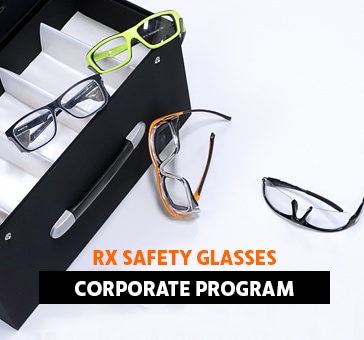
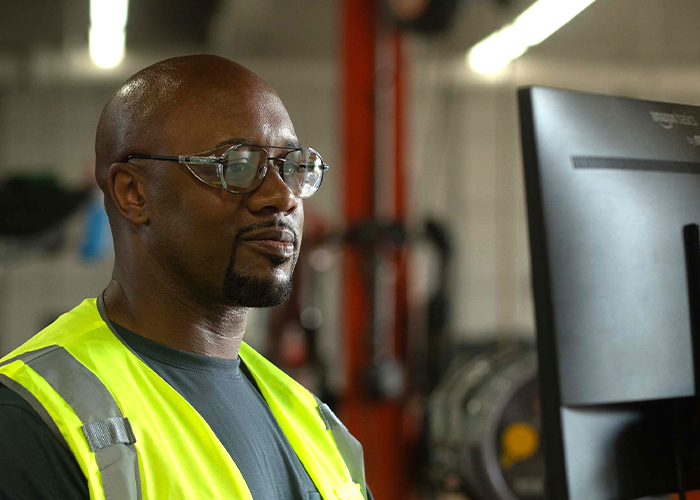
When you need sharp close-up vision and eye protection on the job, safety reading glasses give you both in a single solution. They give you a clear view of fine details while safeguarding your eyes from unexpected impact hazards.
These RX-Safety models protect your eyes in tough environments while staying comfortable during long shifts.
How Safety Reading Glasses Work
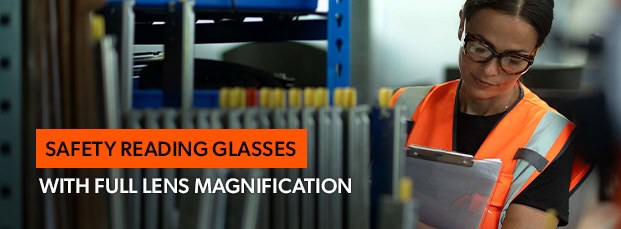
Safety reading glasses combine ANSI-rated eye protection with built-in magnification across the full lens. Unlike bifocal safety glasses, these lenses deliver the same reading power throughout the entire viewing field, eliminating the need to adjust your angle or search for a small magnified zone.
These designs reduce awkward angles and wasted time, so you can focus on wiring, labels, small components, or measurements without constantly repositioning your head.
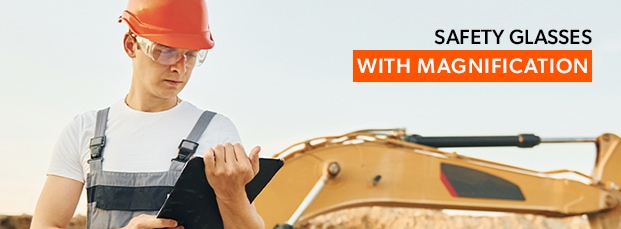
Reading safety glasses with impact-rated polycarbonate lenses and sturdy frames are ideal for professionals who need magnification and eye protection in the same frame. Safety glasses with magnification shield your eyes from debris while letting you focus on detailed work.
Types of Safety Reading Glasses
Safety reading glasses are designed to support close-up work while meeting industrial safety requirements. The primary style in this category is full-lens safety reading glass, which delivers magnification across the entire viewing area.
Full-Lens Safety Reading Glasses
Full-lens safety reading glasses provide uniform magnification throughout the whole lens, giving you consistent clarity from any angle. These work well for any task that requires precise up-close vision, such as reading schematics or inspecting small parts. Ideal for long shifts, full-lens readers offer consistent magnification without tilting your head.
Anti-Fog Safety Readers
In environments with humidity, temperature shifts, or frequent activity, lens fogging can disrupt visibility and slow work. Anti-fog models feature permanent or semi-permanent coatings that reduce lens condensation. These are useful in labs, kitchens, or outdoor sites where moisture and heat cloud your vision.
Wraparound and Low-Profile Frames
Wraparound frames offer maximum side coverage to block flying debris from multiple angles. Low-profile or sporty styles prioritize lightweight comfort while maintaining ANSI Z87+ protection. These frames best suit workers who move quickly between stations or wear helmets, masks, or other headgear.
Common Applications and Use Cases
Magnification and impact protection reduce errors, prevent injuries, and maintain productivity. Below are some of the most common use cases for safety readers.
Machinists
Machinists work with metal parts and sharp tools while reading gauges and measurements. With full-lens magnification, you can see numbers and markings clearly, while impact-rated lenses block flying debris.
Electricians
Electricians rely on clear near vision to inspect wiring, read labels, and interpret circuit diagrams, often in tight or dimly lit spaces. A glance at a wire label or circuit diagram requires steady vision at close range. With safety reading glasses, you can see clearly without removing your eye protection or constantly adjusting your head position.
Mechanics
Mechanics examine small components, fasteners, labels, and diagnostic readings throughout the workday. Identifying wear patterns or reading torque specifications requires consistent close-up clarity. Safety reading glasses provide the magnification needed for detailed inspection while protecting your eyes from sparks, oil, and metal fragments in the shop environment.
Laboratory Technicians
Technicians must read fine print on chemical containers, pipettes, and sample labels. Anti-fog or coated lenses keep your lenses clear in temperature-variable environments, while polycarbonate lenses prevent injuries from broken glass or unexpected splashes.
General Tradespeople and Construction Workers
Tradespeople and construction workers rely on safety reading glasses during measurements, marking, and assembly tasks. Wraparound or low-profile frames add extra coverage when moving through tight spaces or working under overhead hazards.
Choosing a Pair of Safety Reading Glasses
Selecting the right safety reading glasses depends on several factors:
- Lens power: If you already wear reading glasses, match the strength or choose slightly lower magnification for tasks held farther away. Full-lens readers give uniform clarity, while bifocals can help if you switch between close-up and mid-range work.
- Frame style: Wraparound frames provide extra side protection, while low-profile or sporty frames fit better under helmets, masks, or headgear. Comfort is essential; adjustable temples, nose pads, and lightweight materials prevent pressure points and fatigue.
- Special coatings: Certain coatings can improve your glasses’ performance. Anti-fog finishes are helpful in humid or temperature-changing environments, while anti-glare reduces strain from bright lights. Scratch-resistant coatings help extend lens life, keeping your on-the-job vision clear longer.
- Durability: Impact-rated polycarbonate lenses and sturdy frames protect against flying debris and sudden contact with tools. Check for ANSI Z87+ certification to confirm professional-grade protection.
Ultimately, the best pair for you balances the magnification, protection, and comfort you need to perform your job effectively.