Eyeglass lenses come in many materials, from organic plastics to traditional glass. Over time, the lens market has changed significantly as new materials improved comfort, safety, and performance.
In the 1950s and 1960s, glass dominated the lens market. Manufacturers then introduced plastic CR-39 lenses in the late 1950s and early 1960s. These lighter lenses quickly gained popularity. By the mid-1970s, CR-39 became the leading lens material.
Glass lenses remained competitive for a while due to Corning Photogray Extra lenses, an early transition lens made from glass. However, PPG introduced plastic transition lenses in the late 1980s. This innovation shifted the market. By the mid-1990s, plastic lenses had largely replaced glass.
Today, glass holds only about 2% of the market, while CR-39 accounts for roughly 40%.
Popular Lens Materials Today
In recent years, several materials have gained popularity. These include polycarbonate, high-index lenses, and Trivex. Each option offers different benefits depending on the user’s needs.
CR-39 Lenses
CR-39 remains the most affordable plastic lens material. It offers good optical quality, decent scratch resistance, and a lightweight feel. Because of its balance of cost and performance, many people still choose it.
Polycarbonate Lenses
Polycarbonate lenses provide better impact resistance than CR-39. This makes them ideal for safety glasses and active lifestyles. They also have a higher index, which allows for thinner lenses. However, they offer lower optical clarity and scratch resistance. They cost slightly more than CR-39 but less than high-index or Trivex lenses.
High-Index Lenses
High-index lenses come in several levels, including 1.60, 1.67, 1.70, 1.71, and 1.74. As the index increases, the lens becomes thinner and more expensive. These lenses perform similarly to CR-39 in clarity but cost significantly more—often 10 to 20 times higher. People usually choose high-index lenses for strong prescriptions where thickness matters most.
Trivex Lenses
Trivex is a newer material made from cast nylon. It combines the strengths of several other materials. It offers the optical clarity and scratch resistance of CR-39 along with the impact resistance of polycarbonate. As prices continue to drop, more people choose Trivex. It may even become the most popular lens material in the future.
Need Help Choosing?
If you have questions about which lens material suits you best, feel free to leave a comment or ask for guidance. The right choice depends on your prescription, lifestyle, and budget.
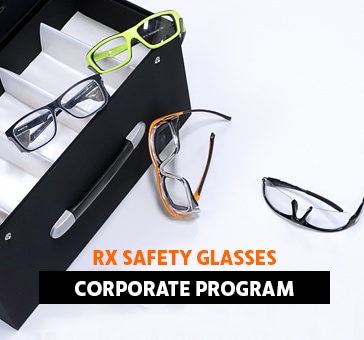
Choosing the right eyeglass lens material ultimately comes down to your specific needs, whether that’s clarity, durability, weight, or impact resistance. Fortunately, retailers like Rx Safety make that decision easier by offering all major lens options—including glass, CR-39, polycarbonate, high-index, and Trivex—along with a wide range of customizable features.
Rx Safety provides high-quality prescription eyewear tailored to both everyday use and specialized applications, ensuring precision and reliability in every pair. Our extensive selection of lens types, coatings, and styles allows you to fully customize your glasses to match your vision needs and lifestyle. Whether you’re looking for superior optical clarity, enhanced safety, or advanced lens technology, Rx Safety offers a convenient, trusted solution for finding the perfect eyeglasses.