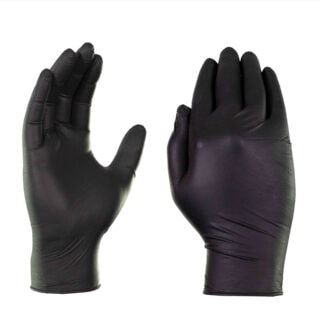
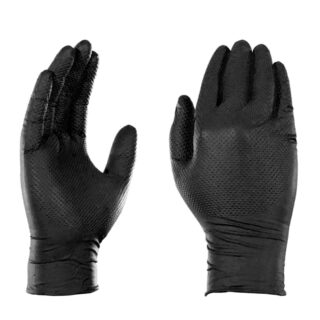
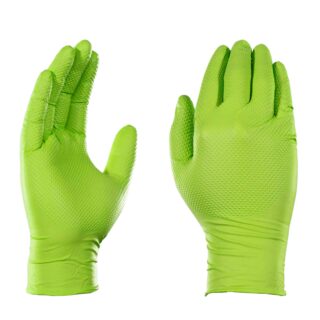
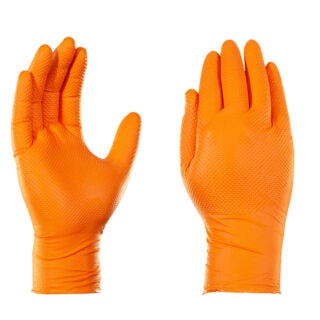
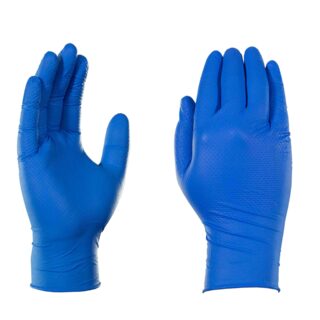
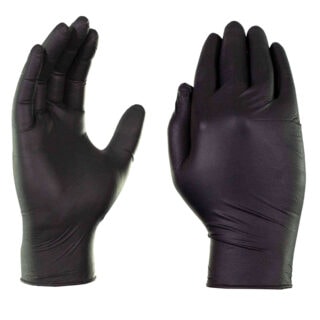
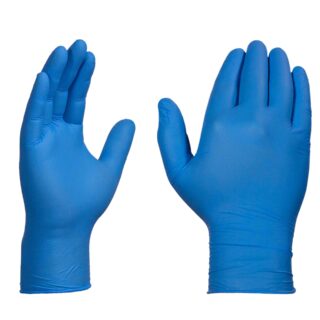
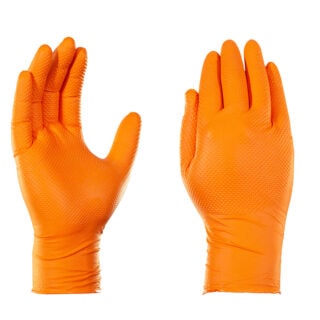

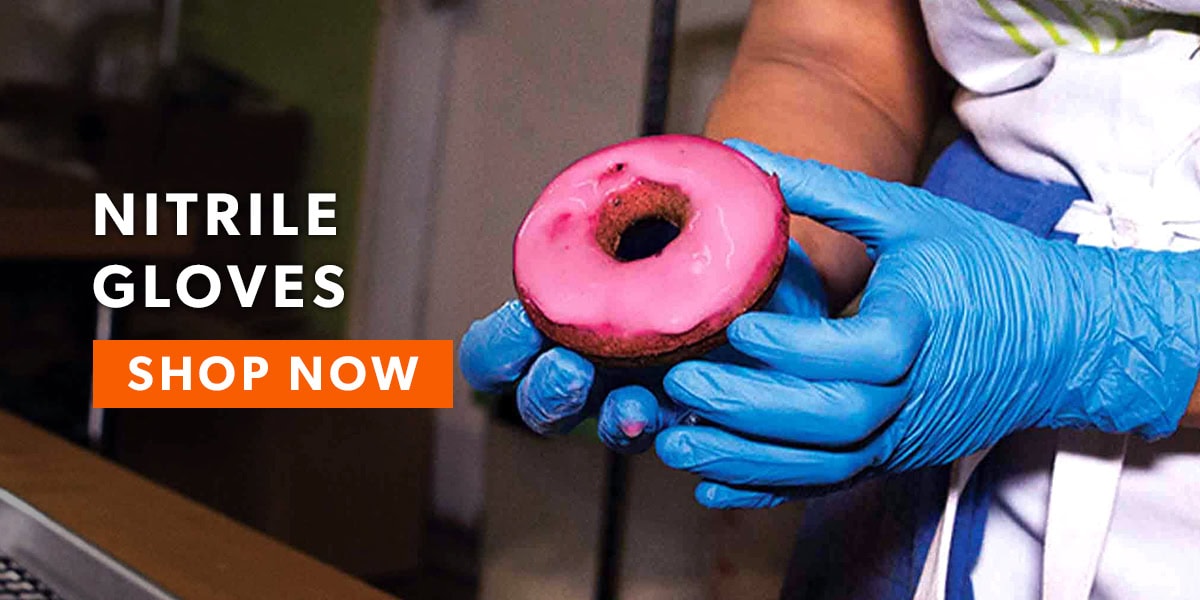
Yes. Nitrile gloves are food safe as long as they carry the right certifications. It’s important to keep this distinction in mind: Nitrile is a type of material, a shorthand for nitrile butadiene rubber or NBR. And “food safe” describes a regulatory status.
Standard industrial nitrile gloves can still fail food-contact extraction tests when its polymer is certified as food-grade. The quality of a nitrile glove comes down to its compounding ingredients, manufacturing controls, and migration testing. This guide covers the standards used to determine whether nitrile gloves are legally and technically safe for food handling.
In the U.S., food-contact compliance for nitrile gloves is governed by FDA 21 CFR 177.2600, titled “rubber articles intended for repeated use.” This regulation sets the maximum extractable limits for any rubber components that touch food.
In order for a glove to meet 177.2600 compliance, it must pass two extraction tests:
Aqueous extractables
The glove can’t release more than 20 mg per square inch when refluxed in distilled water for 7 hours and no more than 1 mg per square inch in the final hour.
Hexane extractables (fatty food simulant)
This stricter test uses n-hexane to verify that fat-soluble chemicals aren’t migrating from the gloves into oils, dairy, or meat.
There’s a different framework in the European Union, called Regulation (EC) No. 1935/2004, which sets general safety requirements for all materials that contact food. Compliant products carry a “glass and fork” symbol.
EU Regulation 10/2011 also adds Specific Migration Limits (SMLs) for individual monomers. For example, acrylonitrile, the key monomer in NBR, has an SML of 0.01 mg/kg in food due to its toxicological profile.
The key thing to remember is that any gloves that touch food must have a documented compliance flow. Gloves that are identical to these products would still not be food safe without the compliance information attached.
Food safety in gloves is primarily impacted by polymer stability. When you’re using gloves to handle food, residual monomers, plasticizers, accelerators, and pigments can all leach into whatever the gloves touch. The rate of that migration depends on the food type and the gloves themselves.
Aqueous foods like fruits, vegetables, bread, and candy are relatively forgiving. They extract very few nonpolar chemicals from nitrile. But fatty foods like oils, cheese, raw meat, and butter are less forgiving. Fat dissolves accelerators, residual acrylonitrile, and processing oils out of the polymer matrix. So a glove can pass aqueous testing but fail hexane testing.
If your gloves only have one compliance credential, then you can’t use them on both types of food. Buyers should always check the manufacturer’s letter of compliance to see the specific food categories listed.
It’s also important to note that food-contact gloves must be organoleptically neutral. They can’t change the taste, odor, color, or composition of the food they touch.
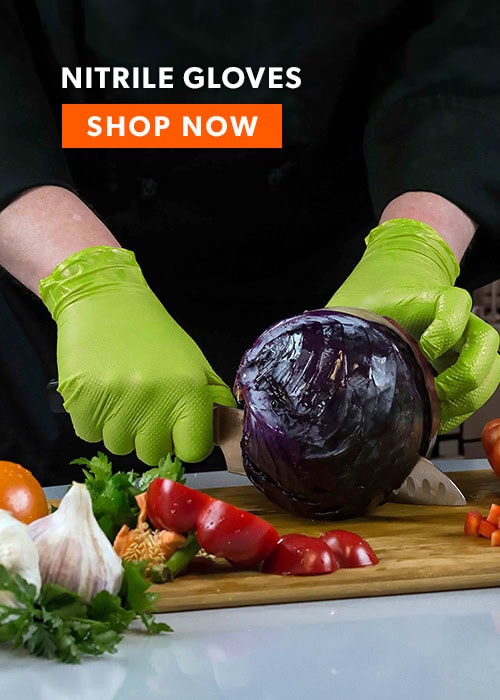
Not all nitrile gloves are built or tested for the same end use. The grade dictates what testing the manufacturer has performed.

Industrial Grade
Designed for general protection against chemicals, oils, and abrasion. Not migration-tested. Acceptable for automotive, janitorial, and mechanical work — not food.

Food Grade
Manufactured under controls that limit additives and tested against FDA 21 CFR 177.2600 and/or EU 1935/2004. These are marketed explicitly as food-contact compliant. Without that label, the gloves shouldn’t be used to handle food.

Medical/Exam Grade
Registered with the FDA as a Class I medical device, these gloves are manufactured to a tighter Acceptable Quality Level (typically AQL 2.5 or lower for pinholes) and validated for blood-borne pathogen resistance under ASTM D6319. Medical-grade gloves are generally also food safe, but the reverse is not true.
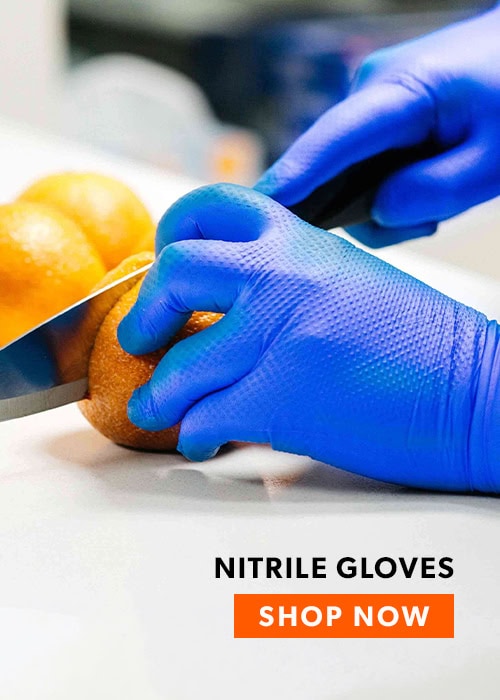
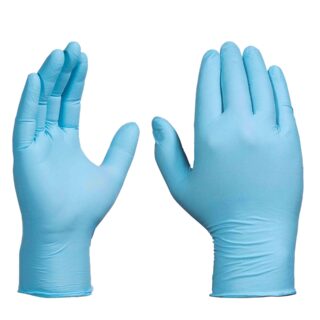
The food-processing industry favors blue nitrile gloves because no whole food is naturally bright blue. So if a fragment of the glove tears off during prep, the high-contrast color makes it immediately visible, making it easier to find and remove the contaminant.
Powder is another concern in the industry. The FDA banned powdered surgeon’s gloves under 21 CFR Parts 878 and 880, citing airway and wound contamination risks. These gloves are also not to be used in the food industry. They carry allergens, donning agents, and chemical residues that can seep into food surfaces.
Modern food-safe nitrile gloves are powder-free.
Even a certified glove only delivers protection when used correctly. That means:
Nitrile is the material. Food safe is the certification. Before buying any glove for kitchen, processing, or packaging use, make sure it:
If you’re ready to buy, RX-Safety carries powder-free nitrile gloves in multiple thicknesses and colors suited for food-service environments. Review our nitrile gloves collection, or compare materials in our guide on nitrile vs. latex gloves before purchasing gloves for a food-handling environment.
Stay on top of the latest news about prescription safety glasses, eyewear, sunglasses, and all the trends in the industry.
DISCOVER NOWBe the first one to know about promotion, new products, and more.
Follow Us On Instagram @rx_safety