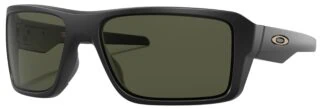

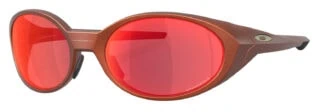

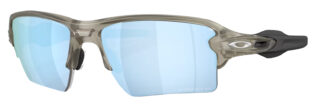

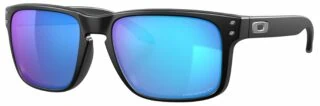


Oakley has sent almost five decades making eyewear that provokes a response. They’re too sporty for the luxury crowd but too bold for minimalists. As the Y2K aesthetic revival brings Oakley’s most aggressive silhouettes back into mainstream fashion, the brand that critics have called a crime against fashion is apparently getting a full pardon.
The Oakley brand is about objective performance and function over subjective style. Let’s break down the technical engineering of Oakley sunglasses, the brand’s “form follows function” ethos, and how you can choose the right Oakleys for your face shape and lifestyle needs.
Oakley launched in 1975, originally selling motocross motorcycle handlebar grips. By the early 1980s, the company had moved on to eyewear. Its governing principle was to start with engineering and let the look follow. That approach resulted in frames that looked unlike anything else at the time: aggressive, technical, and almost alien.
Critics hated Oakleys, but elite cyclists and global sports icons wore them. As photos of the world’s most popular athletes wearing Oakleys spread, consumer brand loyalty quickly grew.
The current Y2K revival has further proven Oakley’s staying power. The very features that made the brand a punchline, including its shield lenses, wraparound geometry, O-Matter™ durability, and cyberpunk aesthetic, became exactly what streetwear fashion wanted. Collaborations with artistic brands like Brain Dead and Palace introduced Oakley into spaces it had never occupied.
Now, vintage Oakley has become a collector’s market. As it turns out, the only “crime” against fashion was that Oakleys were 20 years ahead of their time.

A common complaint about Oakley sunglasses is that they look extreme or unnecessary, which might make sense if you’re only considering the design in fashion terms. When you think of it from an engineering standpoint, the reason for the design becomes clear.
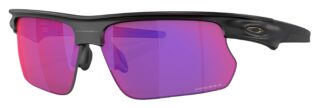
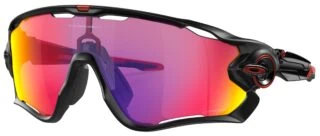
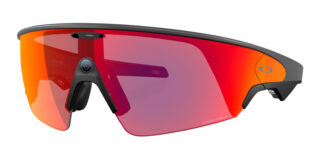
High-base-curve lenses, like those found on the Jawbreaker, the Radar EV, and the Sutro, wrap around the face to maximize peripheral coverage and eliminate light leakage from the sides. These are critical factors for cyclists and athletes who need to track fast movement. The “robotic” look is a byproduct of solving an important optical issue.
Unobtainium® ear socks are another practical design element. This hydrophilic rubber increases grip as it gets wetter. The temple arm shapes, meanwhile, maintain consistent pressure during high-sweat, high-movement activity. They look technical because they are.
Oakley’s HDO® (High Definition Optics) lens manufacturing standard means Oakley lenses are designed to meet or exceed ANSI optical standards, while Plutonite® lens material is common in models that meet or exceed ANSI Z87.1 impact standards.
While fashion eyewear optimizes for slimness, performance eyewear prioritizes eye protection. Nearly every seemingly aggressive design decision has a practical reason behind it.
Luxury eyewear like Gucci or Prada often emphasizes branding and aesthetics over performance engineering, and the logo warrants the luxury price tag. Optical quality is often decent but secondary to the social status the frames communicate.
Oakley has never played that game. The brand’s identity comes from performance, not status association.
For example, Oakley developed its Prizm™ lens technology to target specific wavelengths relevant to particular activities. Prizm™ Road heightens contrast for road surfaces, while Prizm™ Trail amplifies detail in variable forest lighting.
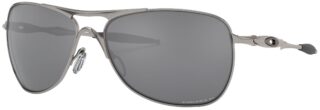
One of Oakley’s most visually distinctive features is the mirrored lens, which is also a result of engineering. Iridium® coatings apply a metal oxide film to the lens surface that reflects specific light wavelengths, controlling light transmission, reducing glare, and creating the mirror finish commonly associated with Oakley sunglasses.
Prizm™ 24k (gold mirror), Prizm™ Sapphire, and Prizm™ Ruby were developed not for aesthetics but from the optical engineering behind each coating. Oakley has published materials1 examining how lens tints and contrast enhancement affect visual performance.
When Gucci or Prada releases a lens designed around your limbic system’s response to contrast, we can revisit the comparison. Until then, Oakley and other luxury brands aren’t competing on the same playing field.

Oakley makes a wide range of frames. Here’s how to choose the design that best suits your face and your lifestyle.
Rounded face

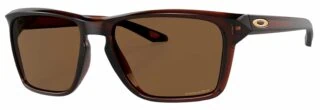
Choose an angular frame. The Holbrook’s squarish lens, keyhole bridge, and strong horizontal lines balance rounder faces. The Sylas offers a slightly more refined profile that fits between the Holbrook and a traditional lifestyle frame.
Square face

Strong jawlines and defined cheekbones work well with rounder, softer frames. The Frogskins’ rounded classic silhouette, with its subtle retro proportions, complements angular features nicely.
Active use
If you use your sunglasses while running, cycling, or playing ball sports, the Flak 2.0 XL is the working standard. They feature semi-rimless construction, a high-base-curve lens, Unobtainium® grips, and full compatibility with Oakley prescription sunglasses through RX-Safety’s optical lab.
Heritage/lifestyle
Retro, rounded, and approachable Frogskins or square, timeless Holbrook combine Oakley’s sport DNA with conventional sunglass sensibility.
Fashion-forward streetwear
The Sutro and the Kato embrace the avant-garde with their unapologetically large design and shield-style lenses.
At RX-Safety, we offer Oakley’s performance frames as prescription sunglasses and even prescription safety glasses. This includes high-index, polarized, Transitions®, and Prizm™-compatible Rx lenses.
Whether a specific frame works on a specific face in a specific context will always be a matter of personal opinion. It’s about matching the frame’s “aggression” to your personality and lifestyle. Style is subjective, but quality is objective. Oakley’s decades-long track record for elite athletic use is a testament to its performance and quality.
So, are Oakley sunglasses a crime against fashion? The better question is whether fashion has finally caught up to Oakley. The Y2K revival, the streetwear adoption of big-shield frames, and the collector market for vintage Frogskins and Razorblades all suggest it has.
Oakley is a brand whose worst offense was being too committed to its own vision to chase trends. That’s not a fashion crime; that’s a design philosophy.
1 Wilson, B. (2020, June 1). Prizm™ Lens Technology. 20/20. https://www.2020mag.com/courses/119700/PDF_Content.pdf


Stay on top of the latest news about prescription safety glasses, eyewear, sunglasses, and all the trends in the industry.
DISCOVER NOWBe the first one to know about promotion, new products, and more.
Follow Us On Instagram @rx_safety