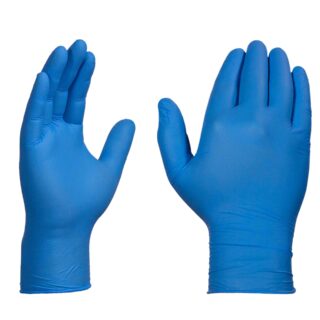
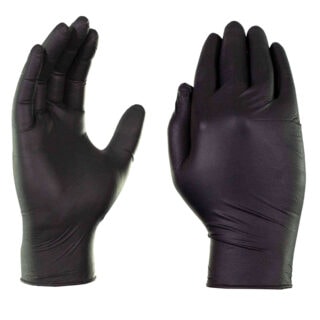
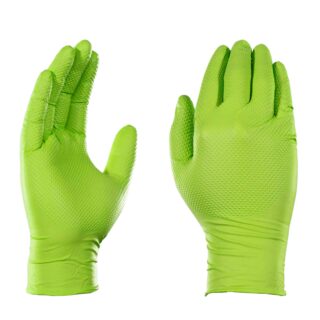
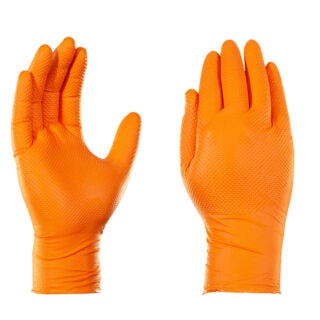
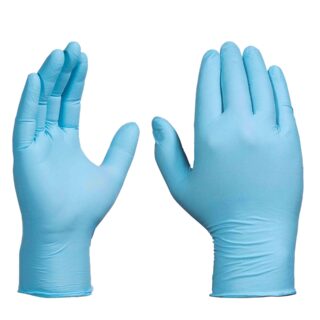
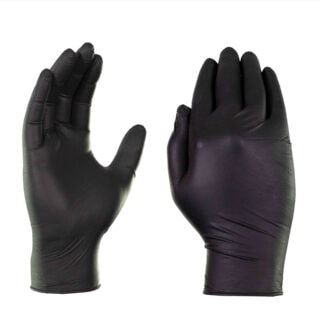
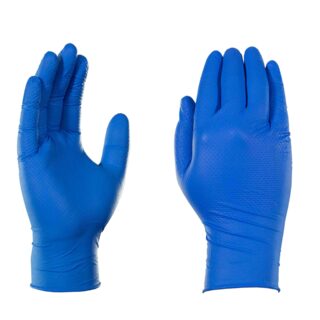
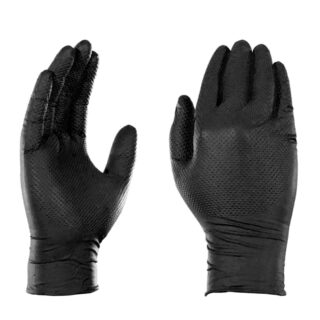
Nitrile safety gloves are the industry standard for latex-free disposable safety gloves. For decades, many industries used latex gloves for puncture, abrasion, and chemical resistance. Healthcare, food service, beauty, automotive, and manufacturing professionals loved its flexibility, sensitivity, comfort, and low cost.
However, many people suffer from latex sensitivity, which causes symptoms ranging from skin irritation to respiratory issues — and, in severe cases, anaphylaxis or death.
Due to latex posing a risk to both professionals themselves and their patients or customers, many industries have transitioned toward safer alternatives, such as nitrile gloves.
We’ll compare the top three types of disposable gloves:
|
Latex Gloves |
Nitrile Gloves |
Vinyl Gloves |
| Material |
Natural rubber latex |
Synthetic rubber |
Synthetic polyvinyl chloride (PVC) |
| Fit and Feel |
Very elastic; molds closely to the hand |
Snug and flexible; slightly firmer than latex |
Looser fit; minimal stretch |
| Tactile Sensitivity |
Excellent |
Very good; close to latex |
Poor to fair |
| Durability |
Moderate; can tear if overstretched |
High; strong puncture and tear resistance |
Low; prone to tearing |
| Puncture Resistance |
Moderate |
High |
Low |
| Chemical Resistance |
Limited; weak against many solvents and oils |
Excellent against oils, fuels, and many chemicals |
Limited; breaks down from solvents |
| Barrier Protection |
Good biological barrier |
Excellent biological and chemical barrier |
Basic biological barrier only |
| Allergy Risk |
High |
Very low |
Very low |
| Cost |
Low to moderate |
Moderate to higher |
Low |
| Shelf Life |
Shorter; degrades with heat and light |
Long |
Moderate |
| Environmental Impact |
Biodegradable but resource-intensive |
Most aren’t biodegradable (eco-friendly options available) |
Not biodegradable |
| Best Use Cases |
Precision tasks; low chemical exposure |
Medical, lab, cleaning, and industrial work |
Short, low-risk tasks |
Why Nitrile Gloves Are Superior
Made from nitrile butadiene (or synthetic rubber), nitrile gloves offer significantly higher puncture and chemical resistance than natural rubber (latex) or vinyl. At RX-Safety, our nitrile glove line protects professionals who can’t afford a protective barrier breach, whether they’re handling corrosive chemicals, automotive fluids, or biohazardous materials.
Unlike vinyl gloves, which can feel loose and brittle and tear easily, nitrile gloves react to your body heat by forming to your hand. This provides outstanding tactile sensitivity for performing delicate tasks.
There are two main types of nitrile gloves:
- Medical grade: Also known as examination-grade gloves, these are designed for healthcare, laboratories, and dental settings and tested to meet FDA bloodborne pathogen standards.
- Industrial grade: These gloves, often made from thicker nitrile, are made for heavy-duty tasks like mechanical work, food service, and cleaning, when snags and oil exposure are common.
Nitrile glove thickness is measured in mils, or units of 0.001 inches. We offer gloves measuring in thickness from under 4 mil (thin for maximum dexterity) to over 8 mil (thick for optimal puncture resistance).
These gloves also come in a variety of finishes, such as diamond-textured palms to provide better grip in wet or oily conditions.
Our gloves, which we offer for bulk purchase or specialized individual protection, meet the FDA standard for low dermatitis potential. This means they significantly reduce the risk of chemical allergies and skin irritation, making them safe for users with allergies or sensitive skin.