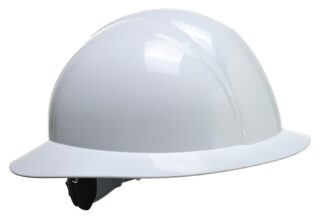
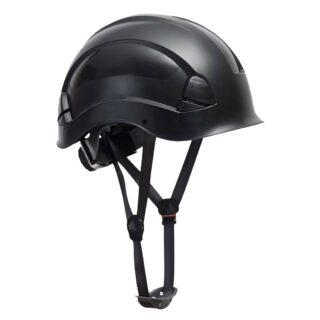
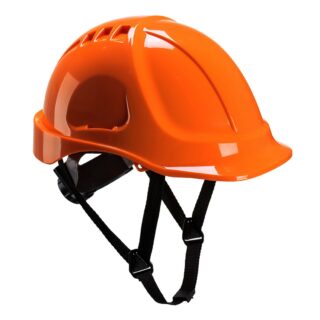

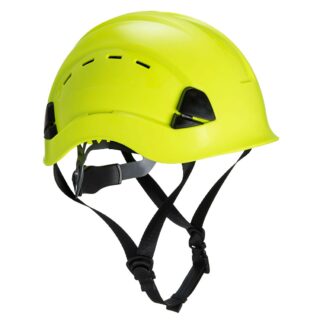



A hard hat is arguably the most recognizable piece of personal protective equipment (PPE). It protects one of your most important organs — your brain — in hazardous work environments, preventing injuries from falling objects, impacts, severe weather, and electrical shocks.
Despite their strength, hard hats aren’t infallible. Like any other piece of safety equipment, a hard hat has a shelf life.
Many workers wear their hard hats for 10+ years without realizing that the internal plastic structure deteriorates over time, increasing the danger of head injury.
That’s why understanding hard hat expiration dates and ANSI/OSHA head protection safety standards is critical in preventing traumatic brain injuries.
Some people believe an unused hard hat lasts forever, or that if a hard hat looks fine, it’s safe to use. What’s the truth?
Although hard hats don’t “expire” like milk, their materials degrade. Even if they look sturdy on the outside, they lose their ability to absorb impacts safely. That’s why they have a recommended lifespan.
Technically, the Occupational Safety and Health Administration (OSHA)1 does not specify a mandatory hard hat expiration date. The agency instead defers to manufacturer guidelines2, requiring employers to:

Hard hats come with a code that identifies their date of manufacture. Typically, the manufacturer stamps the date code on the inside of the shell, most commonly under the brim. It usually looks like an analog clock face; an arrow points to a number between 1 and 12, indicating the month of manufacture, while the two-digit number in the center of the circle represents the year.
The “clock” doesn’t necessarily start on the manufacturing date. Generally, as long as the hat has been properly stored, the clock starts on the hard hat’s first day in use (date of service).
Hard hat replacement involves two phases. Typically, plan to replace the outer shell 2–5 years after the manufacturing date, or 1–2 years of regular use. The internal suspension components require replacement every 12 months.
To be safe, always check the manufacturer’s specific guidelines.
Hard hat PPE safety standards dictate the minimum performance requirements for industrial head protection. OSHA standard 29 CFR 1910.1353 mandates that employees wear protective helmets in areas where head injuries are a risk.
That OSHA standard doesn’t provide criteria for helmets, deferring to the ANSI Z89.1 standard.
The American National Standards Institute (ANSI)4 and the International Safety Equipment Association (ISEA)5 created and standardized the safety guideline known as ANSI/ISEA Z89.1-2014 (R2019) – American National Standard for Industrial Head Protection6.
ANSI Z89.1 governs industrial head protection in the U.S., defining testing requirements and categorizing hard hats for different workplace conditions.
When buying a hard hat from RX Safety, look for these classifications:
Type I
Protects against top-of-head impacts.
Type II
Protects against impacts to both the top and the side(s) of the head
Class G
(electrical)
Tested to withstand 20,000kV
Class E
(general)
General-purpose helmets for construction and industrial use; tested to withstand 2.2kV
Class C
(conductive)
No electrical protection; designed for comfort and impact protection
Every compliant hard hat must have a permanent ANSI label or marking clearly visible inside its shell.
Environmental factors and wear and tear can cause hard hats to expire or degrade well before the recommended replacement date. These include:

UV exposure: Prolonged exposure to sunlight makes plastic brittle and prone to cracking or puncturing. When the plastic shell fades or takes on a chalky texture, the plastic is compromised.

Chemicals: Harsh industrial chemicals, solvents, paints, and even some cleaning agents can degrade shell integrity.

Extreme temperatures: Extreme heat or cold can fatigue the hat’s materials and weaken its impact resistance over time.

Physical impacts: After a hard hat takes a hit or a major drop, you must retire it immediately. Even if there is no visible damage, the internal structure is compromised.
To verify your hard hat’s impact and penetration resistance, perform routine field inspections. For example:
Squeeze test
Grasp your hat with both hands and apply pressure. If you hear creaking or cracking sounds, it’s time for a replacement.
Visual cues
Fading color, deep scratches, frayed suspension straps, or shell nicks indicate you should replace your helmet.
To prevent degradation, never use solvents or harsh abrasive chemicals to clean your hard hat. It’s best to stick to mild soap and water to preserve the shell.
Your brain is too important to leave its protection up to chance. When it comes to hard hats, remember: If in doubt, swap it out.
Is your hard hat nearing the 5-year mark? Browse our selection of ANSI Z89.1-certified hard hats at Rx Safety today. We carry a variety of Portwest safety helmets and replacement parts to keep you protected on the job.


1Occupational Safety and Health Administration (OSHA)
2Head Protection: Safety Helmets in the Workplace (OSHA)
3OSHA standard 29 CFR 1910.135
4American National Standards Institute (ANSI)
5International Safety Equipment Association (ISEA)
6ANSI/ISEA Z89.1-2014 (R2019) – American National Standard for Industrial Head Protection
Stay on top of the latest news about prescription safety glasses, eyewear, sunglasses, and all the trends in the industry.
DISCOVER NOWBe the first one to know about promotion, new products, and more.
Follow Us On Instagram @rx_safety