

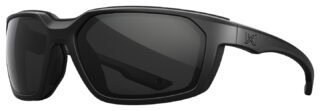
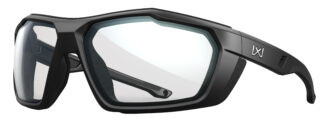


When most people shop for personal protective equipment (PPE), they look for the Z87+ mark, which indicates they carry high-velocity impact protection certification. Impact testing, however, doesn’t protect the wearer’s eyes from chemical splashes, fine sawdust, or toxic airborne droplets.
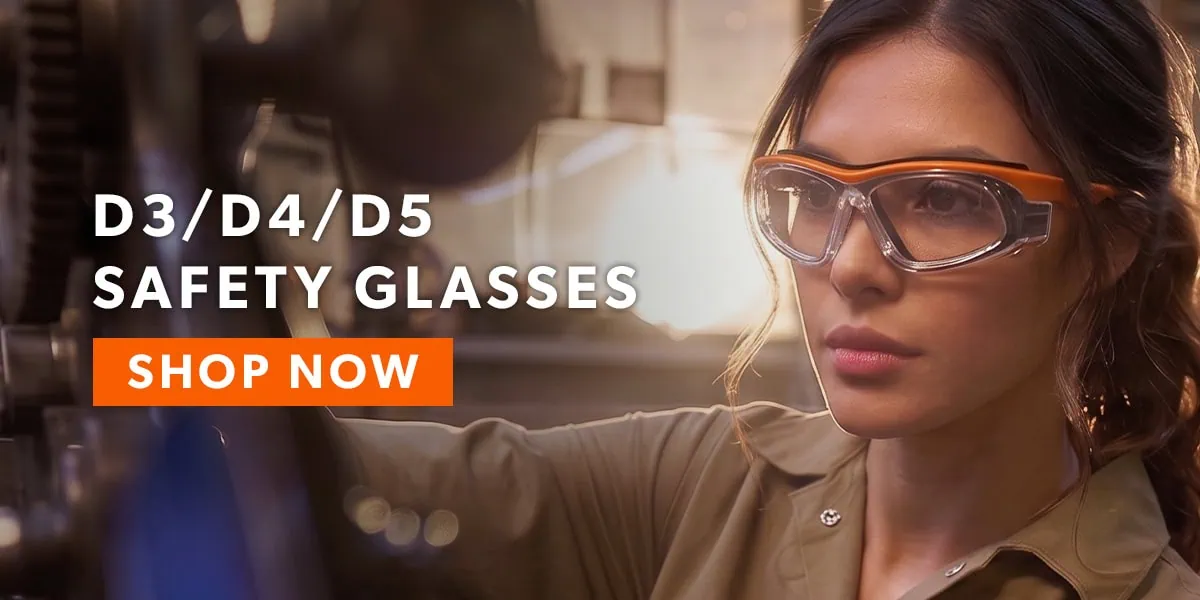
For liquid and dust workplace eye hazards, the American National Standards Institute (ANSI) developed a specialized ratings subcategory, designated by the letter D. If you’ve ever seen a product description touting “D3/D4/D5 safety glasses,” you’ve seen the ANSI splash and dust ratings at work.
We’ll examine the exact science and testing criteria behind the D3, D4, and D5 markings so you can be sure your team wears only legally compliant, hazard-specific eye protection.
On standard ANSI Z87.1 certified safety glasses, you’ll notice intentional gaps around the perimeter. These gaps maximize airflow and prevent fogging under most conditions.
Standard safety glasses are excellent at stopping most flying debris, but they don’t protect your eyes against liquids or dust. Simply by existing where they do, these gaps funnel these hazards into your eyes.
Under ANSI Z87.1, D3/D4/D5 safety glasses must pass specific independent laboratory testing for non-impact hazards. If the frame doesn’t explicitly feature a permanent D3, D4, or D5 engraving, it’s not approved for these hazards.
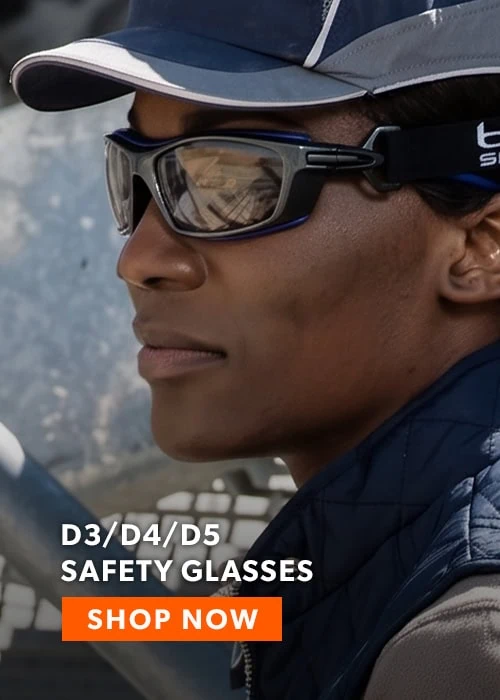
ANSI splash and dust ratings are specific markings under the ANSI/ISEA Z87.1 Standard. We’ll take a closer look at the hazards of each of these three codes: pertinent hazards, required frame structure, and the ANSI tests the D3/D4/D5 safety glasses must pass.
D3 chemical splash safety goggles or glasses protect your eyes from fluid-based hazards, such as chemical splashes, spraying liquids, and airborne biological droplets.
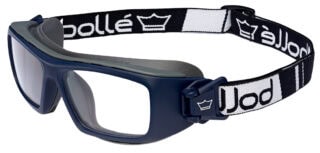
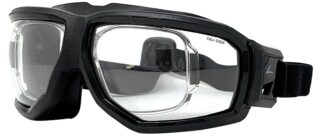
A D3 rating requires full-gasket safety glasses, which are either safety goggles or a hybrid glasses frame with a complete, airtight facial rubber or foam gasket. These glasses must feature indirect ventilation: hooded vents that allow air to circulate while preventing a direct stream of liquid from reaching your face.
For a pair of safety glasses to earn a D3 rating, an independent accredited laboratory tests them by wrapping a dummy head in white, chemically sensitive paper and placing the eyewear over it. Technicians then spray the head with a liquid solution. If any liquid seeps inside the eyewear and stains the paper, the eyewear fails.
A D4 rating indicates that the safety glasses in question have been tested against larger dust particles. Safety glasses with a D4 rating keep large, airborne dust particles, such as sawdust, concrete grit, or metal filings, out of your eyes, where they can scratch the cornea or cause severe irritation.
D4-rated glasses require a continuous, tight facial seal around the entire perimeter of the eyes to keep heavy debris from infiltrating them.
During D4 testing, lab technicians place the eyewear in a specialized dust chamber, where coarse dust particles swirl around at high velocities. The paper lining inside the goggles must remain completely clean.
Wearing D5-rated safety glasses protects your vision from microscopic dust and ultra-fine particulates (smaller than 5 microns), such as sanding particles, powders, or construction dust, which hang suspended in the air like a mist.
Because D5 glasses provide the highest level of fine dust protection, they must feature a fully sealed ventilation system or specialized micro-mesh filters that allow your skin to breathe but block microscopic particulates from entering.
The test for D5-rated glasses is similar to the D4 test, but it uses a significantly finer dust medium to confirm the seal blocks microscopic particles.
Working with chemicals or in heavy dust zones, you may be tempted to rely on standard safety glasses with detachable side shields, but that puts your workplace at greater risk. Regular safety glasses without a D-rating don’t undergo the same rigorous testing or protect against the same hazards, and using them can result in severe OSHA citations.
True D-rated eyewear functions as a physical barrier system, completely separating your delicate ocular cavity from the surrounding atmosphere.
Workers who wear prescription eyewear often hate wearing cumbersome over-the-glasses (OTG) goggles, which can cause severe fogging and painful pressure points. As a leading e-commerce industrial PPE manufacturer, RX-Safety offers an extensive line of ANSI-certified D3/D4/D5 safety glasses. We can outfit these frames with RX-Safety prescription lenses, which we customize in our state-of-the-art digital lens lab.
These prescription safety glasses combine maximum environmental protection with exceptional visual clarity in a sleek, streamlined frame.
Using safety glasses rated for your specific workplace hazard can mean the difference between a safe shift and a permanent eye injury. It’s essential to check your facility’s Safety Data Sheets (SDS) to verify the correct “D” markings.
Don’t take risks with dust and chemical splashes. Upgrade your team’s PPE with the exact compliance ratings they need. Explore RX-Safety’s certified collection of D3, D4, and D5 safety glasses and goggles, and customize them with your exact prescription today.
Stay on top of the latest news about prescription safety glasses, eyewear, sunglasses, and all the trends in the industry.
DISCOVER NOWBe the first one to know about promotion, new products, and more.
Follow Us On Instagram @rx_safety