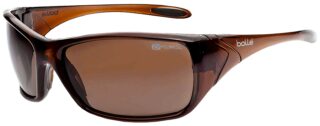

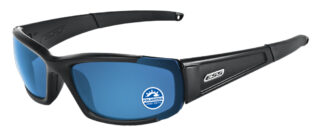
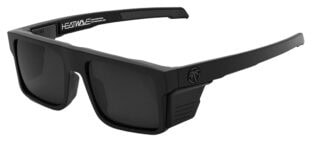

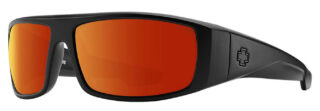

Whether you can wear sunglasses at work depends on your employer’s hazard assessment and the eye protection requirements defined for your job site.
In outdoor environments, tinted lenses may help reduce glare and UV exposure. However, if eyewear does not meet required impact-resistance standards, it may fail to comply with OSHA eye protection requirements and leave you exposed to workplace hazards.
The key question at many workplaces is whether your sunglasses also qualify as certified personal protective equipment (PPE). Safety sunglasses are built to withstand more than regular sunglasses, which keeps you safe and on the right side of workplace regulations.
Standard sunglasses typically don’t provide enough protection in work environments with hazardous debris. They can help to cut down glare and minimize UV exposure, but aren’t engineered to protect your eyes from impact. Here’s how they compare to safety eyewear:
| Feature | Standard Sunglasses | Safety Sunglasses |
|---|---|---|
| Impact resistance | Low (lenses can shatter on impact) | High (tested against high-velocity and high-mass impact) |
| Frame retention | Frames are not designed to hold lenses in place during a strike | Frames are engineered to keep lenses secure on impact |
| Side protection | Rarely included, although available in specialized options | Widely available through wraparound designs and removable side shields |
| ANSI rating | None | Z87 or Z87+ certified |
Many workplaces require your sunglasses to meet strict impact-resistance standards, such as ANSI Z87 or Z87+ certification. Even if you think the odds of getting struck by a high-velocity or high-mass object are relatively low, you should check with your supervisor to verify their requirements before purchasing.
Designer frames made by brands like Ray-Ban and Nike might feel solid in your hand. But they’re rarely designed to withstand the unique needs of workplace safety. They’re optimized for aesthetics and UV protection rather than occupational hazards.
Most lenses in these fashion-forward frames are made from CR-39 plastic or standard glass. Both materials can fracture on impact, increasing the risk of lens breakage under occupational hazard conditions. Polycarbonate fashion lenses offer more impact resistance, but generally aren’t tested or certified to meet workplace safety standards designed for your protection.
Frame construction is another problem with these shades. Designer frames aren’t made to retain their lenses during a strike. Plus, without side protection, peripheral hazards like sparks and flying debris go completely unaddressed. So, even if you buy from a high-quality brand, if there’s no ANSI rating, the sunglasses typically aren’t safe enough for work.
ANSI Z87.1 is the American National Standard for Occupational and Educational Personal Eye and Face Protection Devices. While OSHA enforces workplace eye protection requirements, ANSI Z87.1 serves as the widely recognized benchmark for impact-rated safety eyewear in industrial and construction environments.
Z87 is the minimum standard. Any eyeglasses that feature this rating meet the basic impact resistance requirements for workplace wear. Z87+ goes one step further to protect against high-mass and high-velocity impacts. To earn this “+” designation, lenses must be able to withstand a quarter-inch steel ball traveling at 150 feet per second.
If you’re wondering which standard you need to meet, consider your workplace. The “+” designation matters more in high-risk settings like construction sites, manufacturing facilities, and industrial yards. These are places where high-velocity and high-mass projectiles are a real concern.
However, Z87-rated lenses may be enough in lower-risk outdoor settings. When in doubt, check with your employer to see what they recommend. The Z87 or Z87+ marking is typically stamped on the temple arm and may also appear on the lens.
You don’t have to sacrifice style to get the workplace protection you need. Several of today’s top sunglass manufacturers offer eyewear designed to meet both ANSI standards.

For example, Wiley X is one of the most trusted names in safety and tactical eyewear. Their frames are built to meet all ANSI Z87.1 requirements and often carry MIL-PRF-32432 ballistic ratings for enhanced protection. Wraparound designs provide full peripheral coverage, and most models are available with prescription lenses through RX-Safety.

Oakley’s Standard Issue (SI) line is another popular option. They maintain the brand’s sport-focused aesthetic while complying with key ANSI benchmarks. Some SI models carry the Z87+ stamp, which makes them a realistic choice for most work environments.
You can also consider Bollé workplace sunglasses. They offer a nice balance between European design and high-grade safety performance. You can customize these sunglasses further with anti-fog coatings and wraparound coverage for added protection.
RX-Safety carries workplace sunglasses from all three brands and many others, including Ray-Ban. We can customize your lenses with your prescription as well, so you never have to choose between vision correction and certified protection.
For those who wear corrective lenses, there are two main sunglasses options for workplace safety. You can either wear safety glasses over your contacts or invest in a pair of safety sunglasses with prescription lenses built in. The latter is typically the best option for comfort and visual clarity across lighting conditions.
Polycarbonate is commonly used in prescription safety eyewear due to its lightweight properties and ability to meet ANSI Z87.1 impact requirements. Trivex can also work, offering slightly better optical clarity.
Other factors to consider as you shop include:
Tint color
Gray tints are more versatile for outdoor work, while brown and amber tints are better for variable light conditions.
Polarized lenses reduce reflected glare from surfaces like pavement and water. Suitable for road work, construction, and equipment operation in high-glare environments.
If your job site requires eye protection, your sunglasses need to meet strict safety standards. That typically means either an ANSI Z87 or Z87+ rating, which indicates impact-resistant lenses and a frame designed to retain its shape during a strike. Designer sunglasses, no matter how well made, typically don’t meet the bar unless they have one of these certifications. But you don’t have to sacrifice your aesthetic to stay protected. Explore RX-Safety’s work-safe sunglasses options today to find the right fit, and we’ll add your prescription lenses to protect your visual clarity, too.
Stay on top of the latest news about prescription safety glasses, eyewear, sunglasses, and all the trends in the industry.
DISCOVER NOWBe the first one to know about promotion, new products, and more.
Follow Us On Instagram @rx_safety