


If you’re shopping for tinted sunglasses, the darkness level you choose is more than a question of style. It impacts how you see across different environments. This is measured through a property called Visible Light Transmission (VLT), and it’s worth considering while you shop.
This guide explores the VLT scale, highlighting the key differences between light tint and dark tint options. Keep reading to find the ideal darkness level for your next pair of work glasses, prescription sunglasses, or everyday eyewear.
VLT measures the percentage of visible light that a lens allows to reach your eye. For example, a lens with 80% VLT lets through most of the light that hits it. But a lens with 8% VLT would block the vast majority of it. Different VLT levels are best-suited for various environments. The international standard ISO 12312-1 sorts sunglasses into five categories to help consumers compare tinted sunglass options more effectively:
| Category | VLT Range | Light Conditions | Typical Environments |
|---|---|---|---|
| 0 | 80% to 100% | Indoor and very low light | Fashion, indoor wear, night |
| 1 | 43% to 80% | Variable and overcast | Cloudy days, dawn, and dusk |
| 2 | 18% to 43% | Moderate sunlight | Partly cloudy, urban driving |
| 3 | 8% to 18% | Bright sunlight | Beaches, open roads, general outdoors |
| 4 | 3% to 8% | Intense glare | High-altitude, glaciers, deserts |
Just note that VLT only measures visible light. It doesn’t indicate anything about UV protection, meaning you could buy Category 4 sunglasses and still not get the level of UV protection needed to properly protect your eyes. If you need UV protection, look for sunglasses with a UV-400 treatment. These block the full range of UV rays, unlike other glasses that have more generic labels like “UV Protective.”
Sunglasses with a light tint typically sit within the 18% to 80% VLT range. They’re great for filtering out brightness without sacrificing detail in shadowed areas. This makes Category 1 and 2 lenses well-suited to overcast conditions and shaded areas such as forest trails or wooded roads. People also use them for transitions between indoor and outdoor environments.
The key takeaway is that Category 1 and 2 lenses are best for activities where light levels shift constantly. Color choice also plays a role here. Yellow and amber tints filter blue light and sharpen contrast in overcast conditions. They’re popular for shooting, cycling, and driving on overcast days. Rose and copper tints improve depth on green and earth-toned terrain. Light gray is a neutral option that works well when accurate color rendition is more important than contrast improvement.
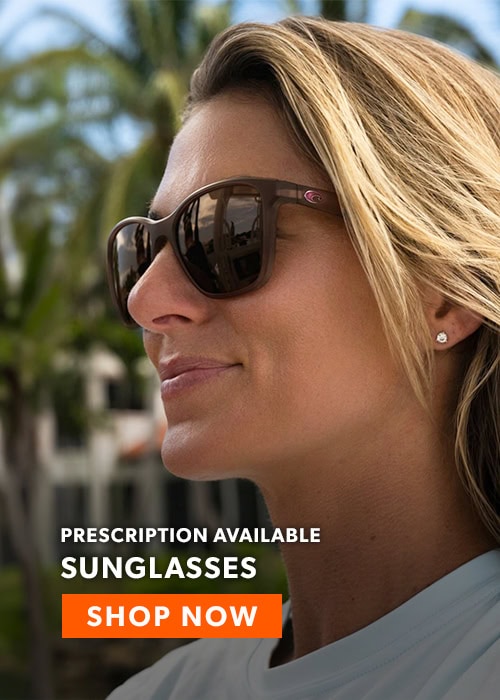
A dark tint blocks 82% or more of visible light. You need this heightened protection in environments where reflected and ambient light create persistent visual discomfort. For example, you might use dark tints on or in:

Open water

Snow

Deserts

Beaches

High-altitude sun
These environments all have surfaces with high albedo levels, which means they reflect a high percentage of incoming light. This leads to your eyes absorbing more radiation.
Lens color matters here, too. Dark grey is a standard choice for general bright-sun use, including driving. Dark brown and amber-based tints improve contrast and depth perception, making them good choices for fishing, golf, and other activities.
Dark tints are also ideal for people with photophobia, those with light-colored eyes, and people taking certain medications that increase light sensitivity. Note that Category 4 lenses are typically reserved for extreme glare situations and shouldn’t be used behind the wheel.
Lens darkness is one way to control how much light reaches your eye. But there are other options, as well. With polarization and mirror coatings, you can get more protection out of the same pair of sunglasses. This could allow you to choose a style you like without sacrificing protection.
Polarization is a chemical filter laminated into the lens. It blocks horizontally-oriented light waves, which are reflected from water, asphalt, snow, and car hoods. It focuses on glare specifically instead of reducing overall brightness.
A polarized Category 2 lens often feels more comfortable than a non-polarized Category 3 lens. This is because they reduce the visual “noise” that makes bright environments fatiguing on the eyes. If you fish, drive long distances, or spend lots of time near reflective surfaces, polarization is a great choice.
Just note that polarization can interfere with LCD screens and phone displays. You might struggle to see clearly at certain angles. That can be problematic for people such as pilots and equipment operators who require consistent visual clarity while working.
A mirror coating is a thin reflective layer applied to the front of a lens. It reflects a portion of incoming light away from the eye before it enters the lens. This can reduce VLT by an additional 10–15% without changing the base lens tint or color. For example, a Category 2 brown lens with a mirror coating can perform closer to a Category 3 lens with a different aesthetic.
Mirror coatings are often chosen for cosmetic reasons, but they do also offer additional protection. If you like the look and could use a bit more protection than your base lens offers, a mirror coating could be right for you.
When choosing a tint, start by considering your environment. If you spend most of your outdoor time in bright, open conditions, a Category 3 lens is probably right for you. But if you move between bright and shaded areas, Category 2 lenses may serve you better.
Once you’ve decided on a base lens, consider layering in coatings. Polarization could be right if you spend a lot of time around reflective surfaces and struggle with glare. Mirror coatings can help you change the aesthetic of a pair of tinted sunglasses and slightly improve performance.
The key takeaway is that style preferences should be your last filter. Finding a pair of prescription sunglasses you actually want to wear matters, but you need to choose the right match for your environment first. RX-Safety builds custom prescription lenses across all VLT categories, with polarized, mirrored, and photochromic options. We make sure that your technical needs and style preferences don’t have to compete. Explore all our custom sunglasses from top brands like Ray Ban and Oakley to get started today.

Stay on top of the latest news about prescription safety glasses, eyewear, sunglasses, and all the trends in the industry.
DISCOVER NOWBe the first one to know about promotion, new products, and more.
Follow Us On Instagram @rx_safety